The Corgathian Kingdom has stood since time immemorial, nearly as long as their primary geopolitical competitor, Phovezila. Corgath was originally a Cuprum colony erected in the chilly North where the air was consistently bitter and cold, leading to a hardened and weathered group of people who weren’t to be trifled with.
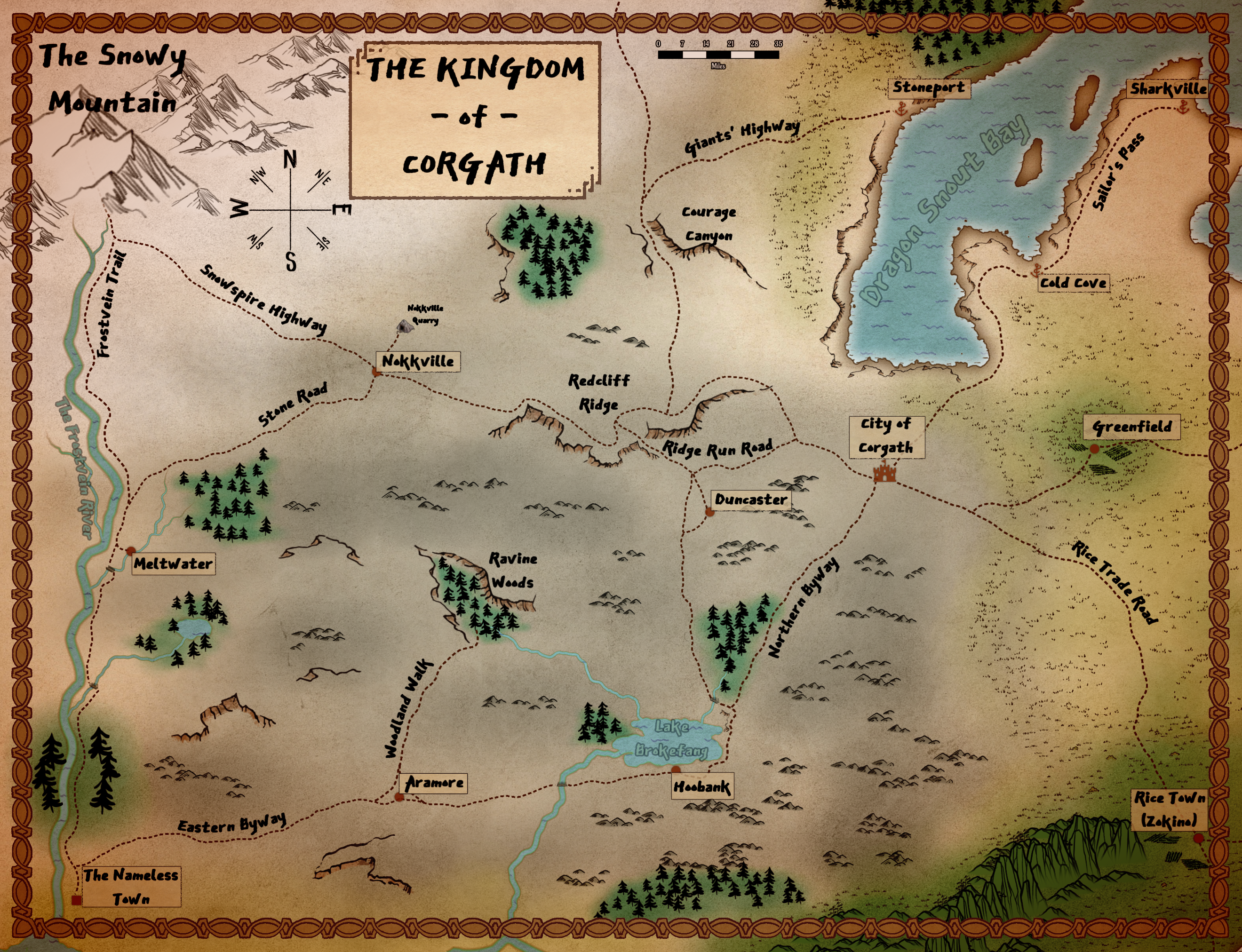
A Hand-Drawn Map of Corgath, created by Red in 275 DHT.
Capital
The capital city of the Corgathian Kingdom was the City of Corgath.
Ethnic Groups
Corgath was mainly the home of Humans. Isutan traders often settled down in Corgath, although they didn’t form diasporas, instead assimilating into the Corgathian populace.
Corgathian
Link to original
Corgathian people were pale-skinned people that resembled their ancestors, the Cuprum. They often had light brown or blonde hair, although black hair was sometimes present.
Duns were present in small diasporas, and notably roamed the Corgathian countryside as itinerants or bandits. Naga were exceedingly rare, with the cold climate deterring most from settling within the kingdom.
History
Corgath was a mining settlement many, many years before the Demon Wars, and was never intended to be a kingdom when it was first founded. Hence, its capital city was located very far away from fertile soil. While pockets of cultivatable ground existed in scarcity throughout the kingdom, a close alliance with The Eastern Provinces would form. The Isutan people would give the Corgathians food and other supplies like lumber for high-quality building stone and useful metals. In exchange, Corgath would export stone, precious metals, and other fruits of the earth.
Eventually, Corgath would establish a port city, Sharkville, to help trade with individuals from farther away.
Common Architectural Style
Being located in a rocky region, many of the buildings across the Corgathian Kingdom were made primarily of stone. This is especially exemplified in the city of Nokkville.
Language
Corgathian
Corgathian was a brutalist evolution of the Eirtung language spoken by the Cuprum Kingdom. It began as a regional dialect after several years of Corgath’s existence as a Cuprum colony. Once Corgath gained independence in 369 PBD, the Eirtung spoken by Corgathians quickly shifted away from its original form from the lack of communication with true Eirtung speakers.
Eirtung Literacy
Much of the written forms of Eirtung and Corgathian remained the same, so those who could read and write Corgathian could often comprehend Eirtung, with some difficulty.
Written Form
Eirtung was written as runes with specific concepts/ideas attached to a “word”. Corgathian would simplify the runes, making them significantly to write.
Link to original
Currency
Corgathian currency was seen in the form of small blocks, roughly 1 cubic centimeter in size. They were made of a solid bronze metal. The sides of the cube had indents on 3 sides, and pegs on the other 3. These pegs and indents allow the cubes to click together, allowing ease of storage and preventing the loss of loose coins. These cubes were called Royal Clicks (often abbreviated to “clicks”), but Corgathians would also refer to them by their slang name—“block”. Block can refer to either a single Royal Click, or a larger amount.
“I earned some good block this weekend.”
“I can’t believe they charge that much block!”
“Someone dropped some block on the roadside, it seems.”
Each Royal Click was decorated with embossing that showed the authenticity of the piece. Of course, over time each Royal Click would the detailing as they’re clicked together and snapped apart. Once a Royal Click was close to losing the embossing on one side, it could be returned to the Royal Foundry. The Royal Foundry collects these old Royal Clicks and melts them down to form new block while giving individuals who return old pieces with new ones.
Geography
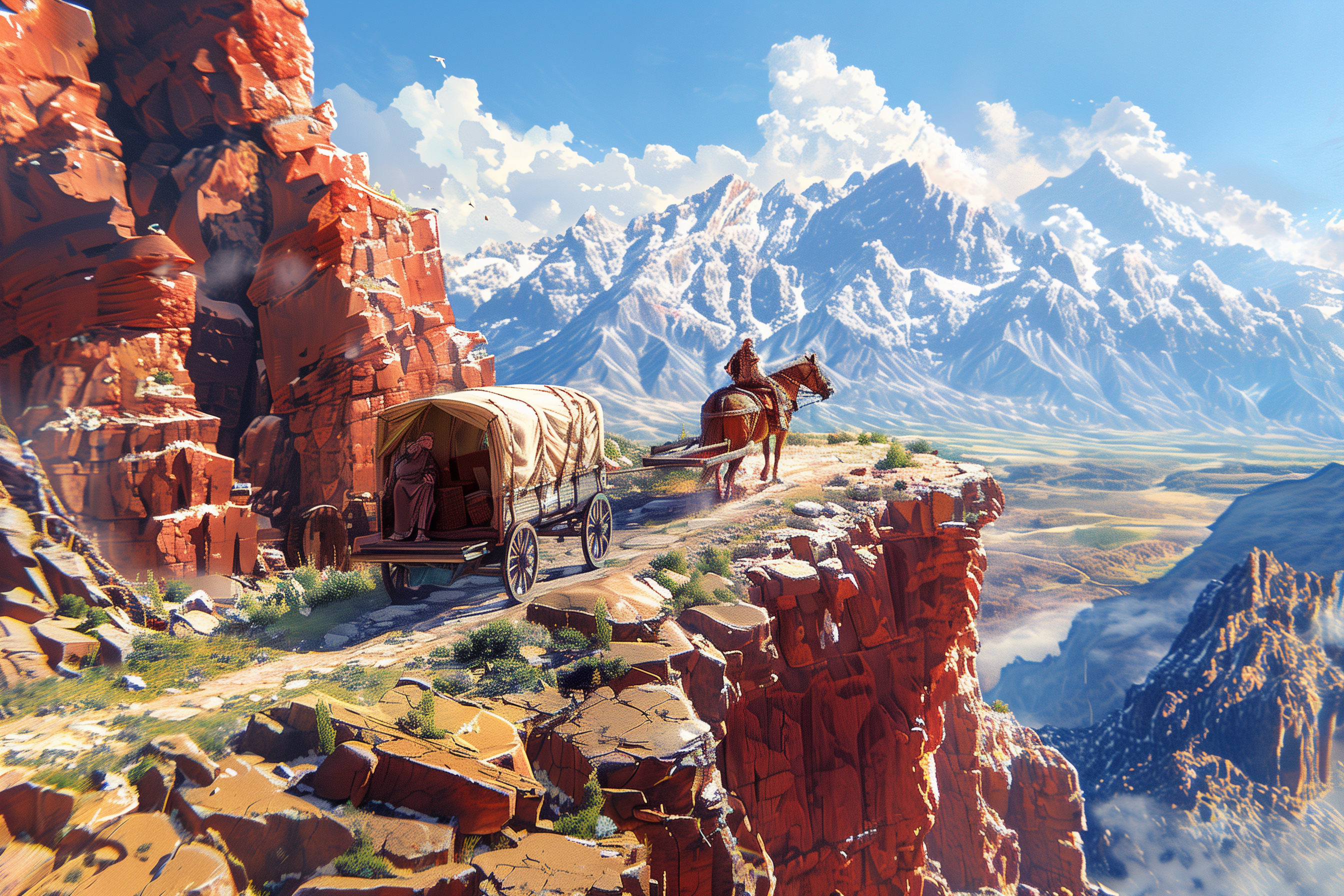
The kingdom of Corgath is a vast region with many cities, villages, and landmarks.