The living stone of nisekite was originally uncovered in the humid tunnels of the Corpse of Niseki. Nisekite was an artificial material of unknown origin, primarily used by the people of Nekrosaka for lithonatomical augmentation.
Appearance
Nisekite was scavenged in pieces of various size or shape. Commonly, it was stripped from the side of the tunnels of the Corpse of Niseki as bricks, usually about 1 foot long on their longest sides. Larger pieces of nisekite could be recovered in other locations within the caverns.
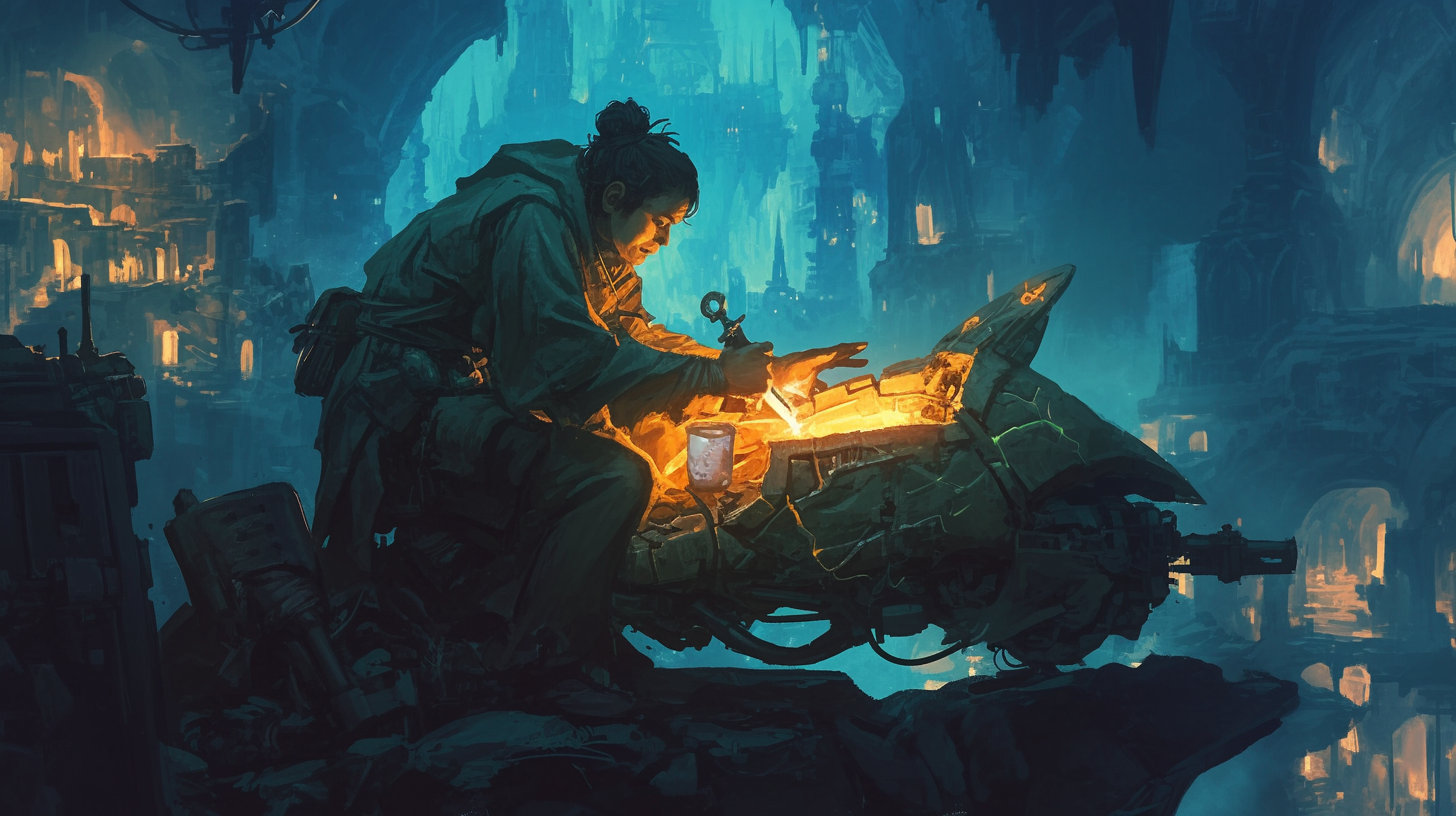
Nisekite was a roughly-textured, grey stone with magical runes carved onto one or more of its faces. It had several bore holes on it, from which a blue-tinged flesh grew out from. These holes, and the flesh that emerged, were what held nisekite pieces together in the Niseki Caverns. This flesh was also what enabled nisekite to bond to the living flesh of an augmented’s frame.
Nisekite would continually regenerate flesh as long as the stone of origin hadn’t received extreme damage. Altering the runes on the face of the stone could also change the behavior of the flesh grown. Nisekite flesh was unlike Sculptoris in that it didn’t proliferate out of control: it was tightly regulated in its behaviour by the runes on its point of origin. Nisekite flesh required minimal water, nutrients, or other biotic factors to grow. Nisekite found in the Corpse of Niseki were able to distribute resources evenly to ensure continual growth, but nisekite separated from its native environment required a manual feeding of the material. For Lithonatomy, nisekite flesh acquired sustenance from the host body, once properly integrated. For other nisekite-based tech, like Runecycles, food would have to be manually fed to the machine.
Lithonatomy
Lithonatomy was the term for any sort of prosthetic created from nisekite. Lithonatomical components were grafted onto living organisms by stonemodders to create creatures categorized as augmented.
Lithonatomical prosthetics varied widely in their form and usage. Lost limbs as small as a hand could be created from nisekite. More substantial wounds, like entire arms or even the loss of complex organs like an eye could be compensated with more intricate lithonatomy. Extremely skilled stonemodders even discovered how to create lithonatomical brain segments that could be used to export and important mental knowledge between two augmented.
In Nekrosaka, many miners turned to augmentation in order to improve their mining efficacy past their mortal frame. While some miners may have opted to replace their arms with lithonatomy in order to swing a pick without tiring quickly, others may have opted to undergo more dramatic changes. For example, miners could replace their lower limbs with a set of spider-like appendages which would allow them to climb across challenging surfaces.
The function and capability of lithonatomy was nearly limitless, only restricted by the skill of the stonemodder installing it.
The Kenha and violent Nekrosakan criminals opted to use lithonatomy that facilitated improved combat forms. Lithonatomical cannons, sensors, or other systems could greatly improve the effectiveness of a combatant.
The Songkram & Lithonatomy
The existence of lithonatomy was widely unknown by the Songkram, since the Bornu family that ruled Nekrosaka did their best to obfuscate the existence of the Corpse of Niseki. They rationalized that if the Songkram learned of such a fantastical thing, they could lose their authority over Nekrosaka as greater Songkram officials moved in to observe operations and direct research.
The longer the Bornu went without telling the Songkram, the greater the penalty of witholding such information became.
Augmented
While most people would think of Humans as the recipients of lithonatomical augmentation, any fleshly being could undergo a stonemodding operation. This included animals; augmented hounds were commonly used in Nekrosaka as guard dogs, as an example.
Incompatible Races
Because lithonatomy required the flesh of nisekite to bond with other, living flesh, certain Legerian sapients were entirely excluded from augmentation:
The augmented were divided into 3 categories, called classes.
Class 1
Class 1 augmented were individuals or animals with little to no discernible lithonatomical components. This included people with a single lithonatomical arm, a replaced internal organ, or other minute, concealable augmentations.
Class 2
Class 2 augmented had obvious, difficult-to-conceal lithonatmy. Initiates to the Kenha fell into this category, alongside seasoned miners that delved into the deepest regions of the Deepstar Mines or Niseki Caverns.
Class 3
Class 3 augmented had replaced most, if not all of their corporeal form with nisekite augmentations. Looking upon a class 3 augmented was like looking upon a golem wrought from stone.
Drastic class 3 augmented may have lost their humanoid form entirely, with some adopting such extreme lithonatomical components that resulted in immobile, serpentine, insectoid, or otherwise monstrous forms. They were still biological, mortal sapients deep within, but from the exterior they looked like lithic machines.
Runecycles
Runecycles
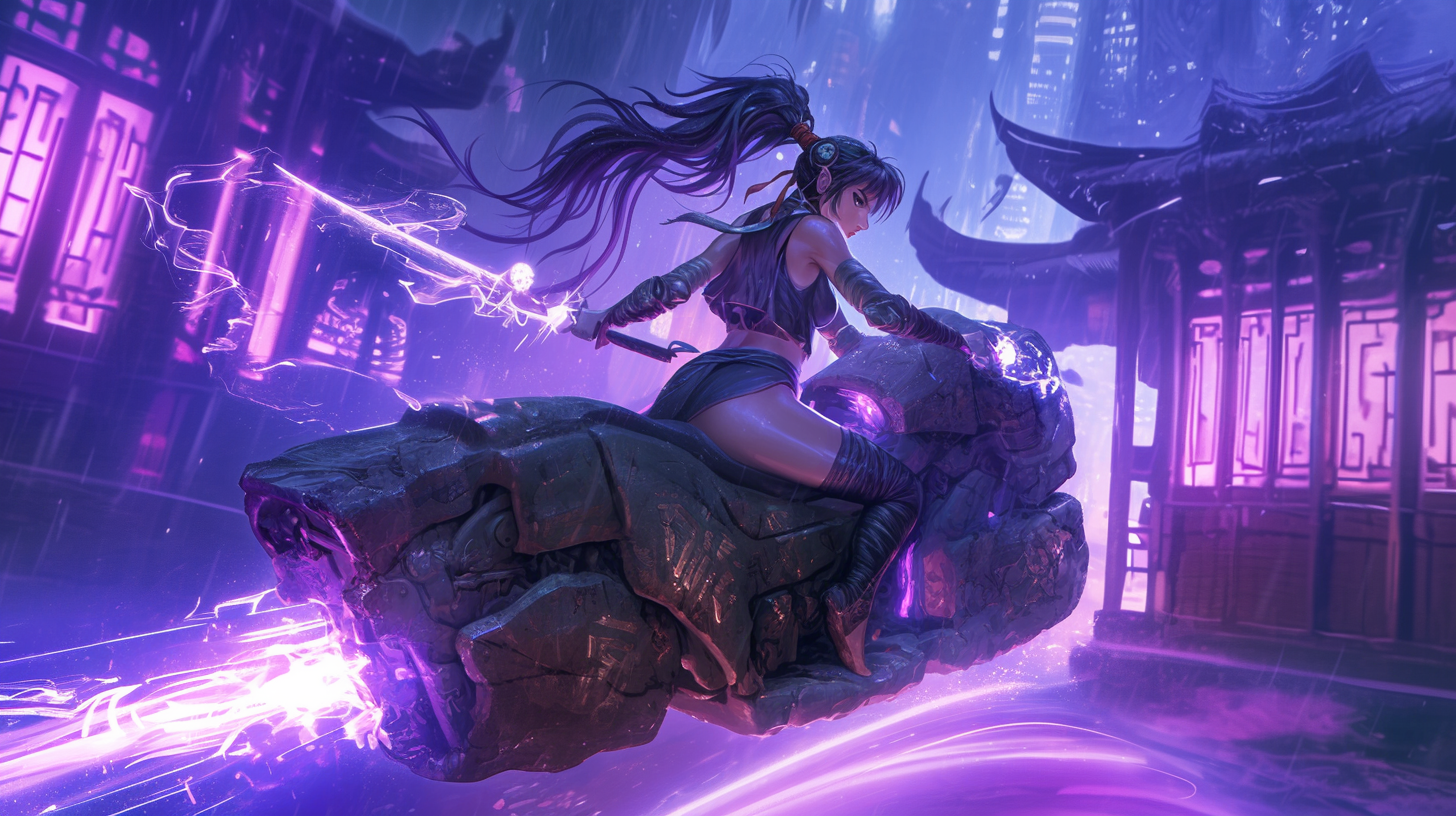
Runecycles were Nisekite vehicles that were uncommon but widespread throughout the city of Nekrosaka. They functioned as hovercycles, and enabled riders to quickly traverse the city.
Invention
With rampant poverty, crowded streets, narrow alleyways, and lack of vegetation being staples of Nekrosakan life, horse-drawn vehicles were an exceptionally rare thing to find. The logistics required to maintain even a single horse in the dangerous prison-city were unrealistic. However, Nekrosaka was a busy city, and people were eager to get to places quickly. Thus, the runecycle was invented.
Usage
Transportation
Runecycles were tailor-made to be the ideal vehicle for traversing Nekrosaka. They were compact enough to be stored without taking up valuable space, and their frontal profile was narrow, allowing them to easily squeeze through Nekrosaka’s tight alleyways and maneuver through busy crowds in what few large city squares there were.
Commercial runecycles were still an expensive thing to acquire, and typically only citizens who needed to travel long distances would invest in one.
Races
It wasn’t long after the runecycle’s invention when the many criminal organizations populating Nekrosaka’s depths started to use them as a form of entertainment. Large leagues of runecycle racers began to spring up, and runecycle stonemodders began to develop additional gadgets and improvements to make them more fit for high-speed, perilous racing. The more competitive runecycle races, which were not far off from Bloodsports, saw runecycles equipped with weapons and other equipment that focused on eliminating the competition rather than simply finishing first.
Kenha Operations
The Kenha often used runecycles to help them get around Nekrosaka, aiding them in hit-and-run attacks as well as quickly spreading information to allied operatives.
Construction & Maintenance
Building a Runecycle
Runecycles were built from large pieces of Nisekite by specialized stonemodders who were experts in creating the runic hovercycles.
Runecycle Stonemodders
Constructing a runecycle out of nisekite was a far less precarious and meticulous process compared to creating an Augmented. However, the expert skillset of a stonemodder were still of the utmost importance when it came to building a runecycle because majority of the components involved were still Nisekite.
Link to originalSuggested reading: Runecycles
Runecycles came in a variety of designs, completely dependent on the creator. Commercial runecycles for the everyday Nekrosakan were simplistic, rugged, and resembled floating bricks in most cases. Slightly wealthier Nekrosakans may have gotten their runecycles decorated with small decorative embellishments, or carved into sleeker, more organic designs. Owning a nice looking runecycle was a dangerous call—thieves would have their attention quickly drawn to the vehicle.
Runecycles used by Kenha, criminals, or runecycle racers were much hardier and elaborate. They were often reinforced with metal armour, upgraded with weapons and/or defensive gadgets, and generally carved into much more aerodynamic designs.
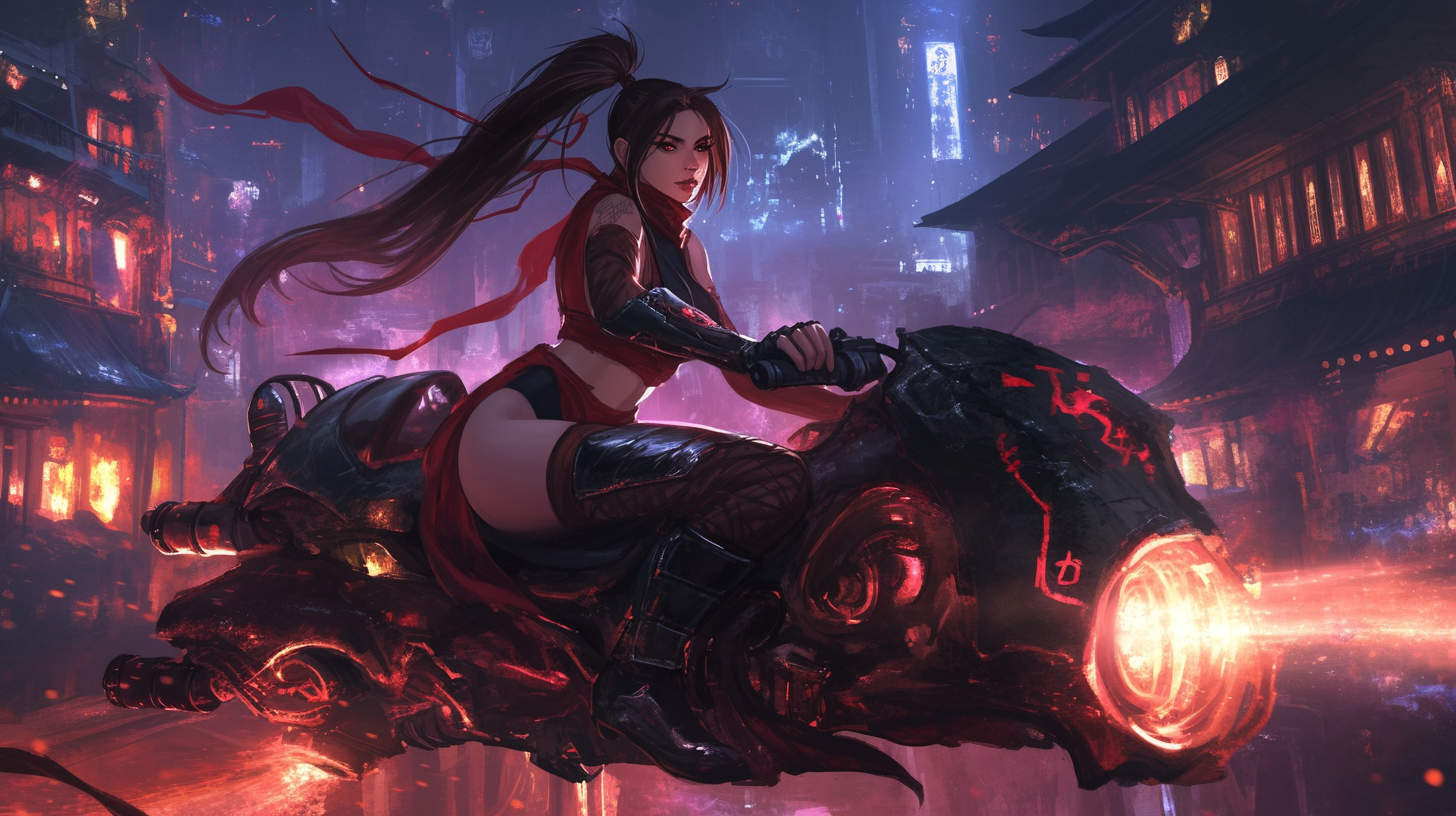
A prolific runecycle racer poses on her custom-built runecycle. Not only is it designed to minimize air resistance, but it has been boosted with state-of-the art Destrian technology--obtained through illegitimate channels, of course.Refueling/“Feeding”
Runecycles were relatively easy to maintain. While they would inevitably require repairs, the parts of the vehicle made of Nisekite flesh could self-heal over time.
Fueling a runecycle was also easy. Being made of living stone, runecycles required sustenance just like any lithonatomical component. However, runecycles were extraordinarily energy efficient, and “feeding” one was much more economic than feeding a horse. Typically, runecycles were fed with unwanted food waste, like meat trimmings, rotten vegetables, et cetera. The actual feeding process was equally as easy—simply grind up the feeding material in a little bit of water to produce a nutrient rich (yet often disgusting) slurry. The slurry could be fed to the nisekite by simply pouring it onto exposed nisekite flesh. Many runecycles were built with feed tubes (not unlike the filler of a gas-powered vehicle) that this slurry could be poured into. Runecycles could be recognized as in need of feeding by its performance—a runecycle would move slower the “hungrier” it was.
Reception
Bornu Watch
The Bornu had a tenuous acceptance of Runecycles in Nekrosaka, much like their views on lithonatomical augmentation. While it caused many problems in terms of enabling the outmaneuvering of Bornu Nakai, the value that the vehicles brought to the city’s overall functioning wasn’t able to be ignored. Thus, the Bornu have accepted runecycles for everyday use while cracking down on runecycle races.
Spread Across Legere
Runecycles very rarely made their way out of Nekrosaka, just like Nisekite-based technology in general. The tight Bornu customs in Lah Ding meant that nisekite, let alone an entire runecycle, were virtually impossible to smuggle out to the rest of Legere. That being said, there were a few sparse occasions where a runecycle was successfully exported to Hohm.
Link to original