A stonemodder was a type of craftsman from Nekrosaka who specialized in building Runecycles, or grafting lithonatomical components to a living being in order to produce an Augmented. Becoming a stonemodder was challenging—a mastery of artifice, stone carving, and Biomancy were all necessary to perform effective and safe stonemodding. Suffice to say, the seedy city of Nekrosaka was home to a bounty of less-than-reputable stonemodder hacks.
Suggested reading: Nisekite
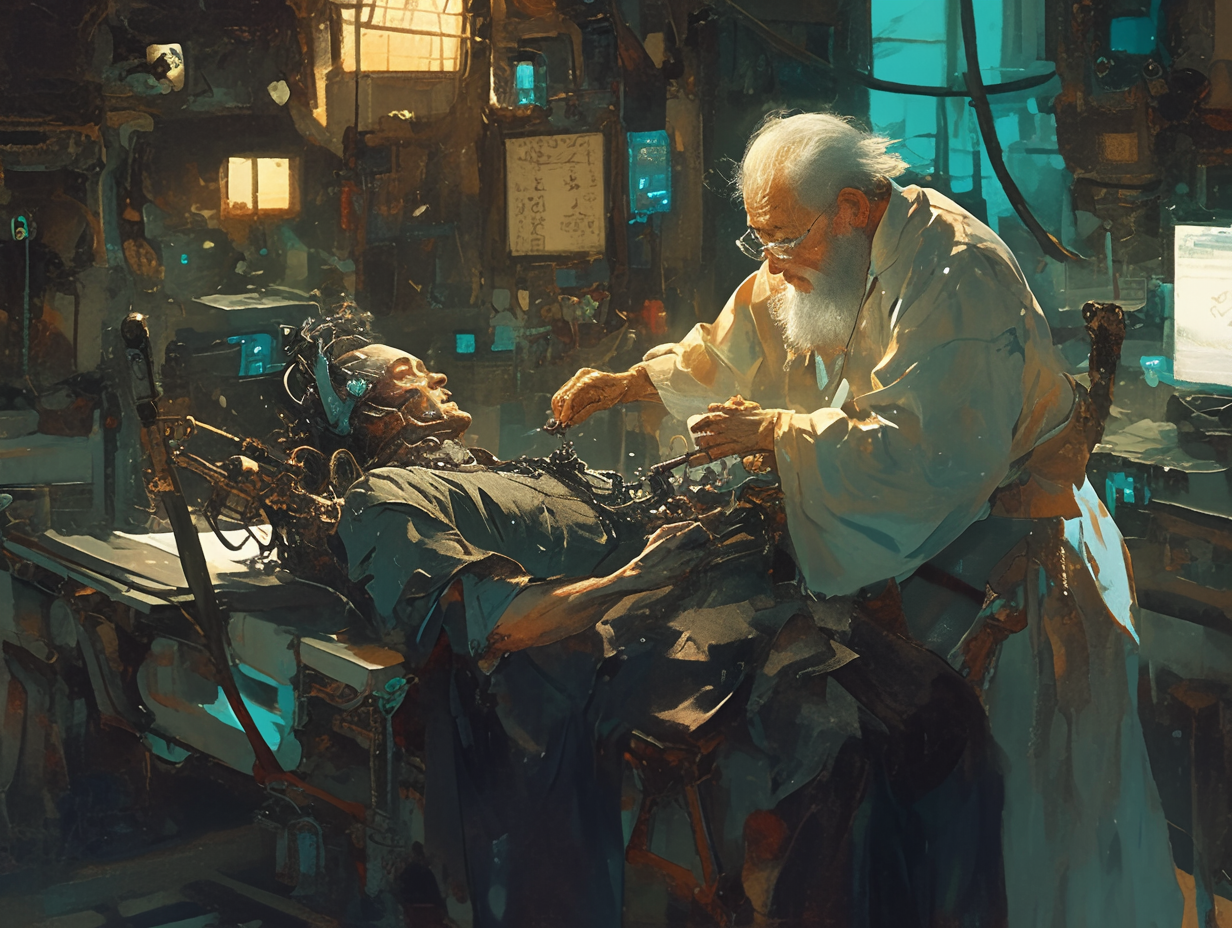
Stonemodding Operations
Stonemodding was a process that typically took 72 hours to complete. While the actual operation of grafting lithonatomy to a being could be completed within a day, the recovery period following the procedure was crucial to ensure everything had “attached” properly. Failure to observe this period of rest could lead to various chronic detriments.
A plethora of materials outside of Nisekite were necessary to facilitate stonemodding. Various magical herbs to calm the body had to be employed while various alchemical substances would help prepare native flesh to bond with the nisekite’s. Other mechanical pieces made from wood, metal, non-nisekite stone, or other exotic magical materials may also be needed to create a lithonatomical implant.
Augmented
Lithonatomy
Lithonatomy was the term for any sort of prosthetic created from nisekite. Lithonatomical components were grafted onto living organisms by stonemodders to create creatures categorized as augmented.
Lithonatomical prosthetics varied widely in their form and usage. Lost limbs as small as a hand could be created from nisekite. More substantial wounds, like entire arms or even the loss of complex organs like an eye could be compensated with more intricate lithonatomy. Extremely skilled stonemodders even discovered how to create lithonatomical brain segments that could be used to export and important mental knowledge between two augmented.
In Nekrosaka, many miners turned to augmentation in order to improve their mining efficacy past their mortal frame. While some miners may have opted to replace their arms with lithonatomy in order to swing a pick without tiring quickly, others may have opted to undergo more dramatic changes. For example, miners could replace their lower limbs with a set of spider-like appendages which would allow them to climb across challenging surfaces.
The function and capability of lithonatomy was nearly limitless, only restricted by the skill of the stonemodder installing it.
The Kenha and violent Nekrosakan criminals opted to use lithonatomy that facilitated improved combat forms. Lithonatomical cannons, sensors, or other systems could greatly improve the effectiveness of a combatant.
The Songkram & Lithonatomy
The existence of lithonatomy was widely unknown by the Songkram, since the Bornu family that ruled Nekrosaka did their best to obfuscate the existence of the Corpse of Niseki. They rationalized that if the Songkram learned of such a fantastical thing, they could lose their authority over Nekrosaka as greater Songkram officials moved in to observe operations and direct research.
The longer the Bornu went without telling the Songkram, the greater the penalty of witholding such information became.
Augmented
While most people would think of Humans as the recipients of lithonatomical augmentation, any fleshly being could undergo a stonemodding operation. This included animals; augmented hounds were commonly used in Nekrosaka as guard dogs, as an example.
Incompatible Races
Because lithonatomy required the flesh of nisekite to bond with other, living flesh, certain Legerian sapients were entirely excluded from augmentation:
The augmented were divided into 3 categories, called classes.
Class 1
Class 1 augmented were individuals or animals with little to no discernible lithonatomical components. This included people with a single lithonatomical arm, a replaced internal organ, or other minute, concealable augmentations.
Class 2
Class 2 augmented had obvious, difficult-to-conceal lithonatmy. Initiates to the Kenha fell into this category, alongside seasoned miners that delved into the deepest regions of the Deepstar Mines or Niseki Caverns.
Class 3
Class 3 augmented had replaced most, if not all of their corporeal form with nisekite augmentations. Looking upon a class 3 augmented was like looking upon a golem wrought from stone.
Drastic class 3 augmented may have lost their humanoid form entirely, with some adopting such extreme lithonatomical components that resulted in immobile, serpentine, insectoid, or otherwise monstrous forms. They were still biological, mortal sapients deep within, but from the exterior they looked like lithic machines.
Link to original
Runecycle Stonemodders
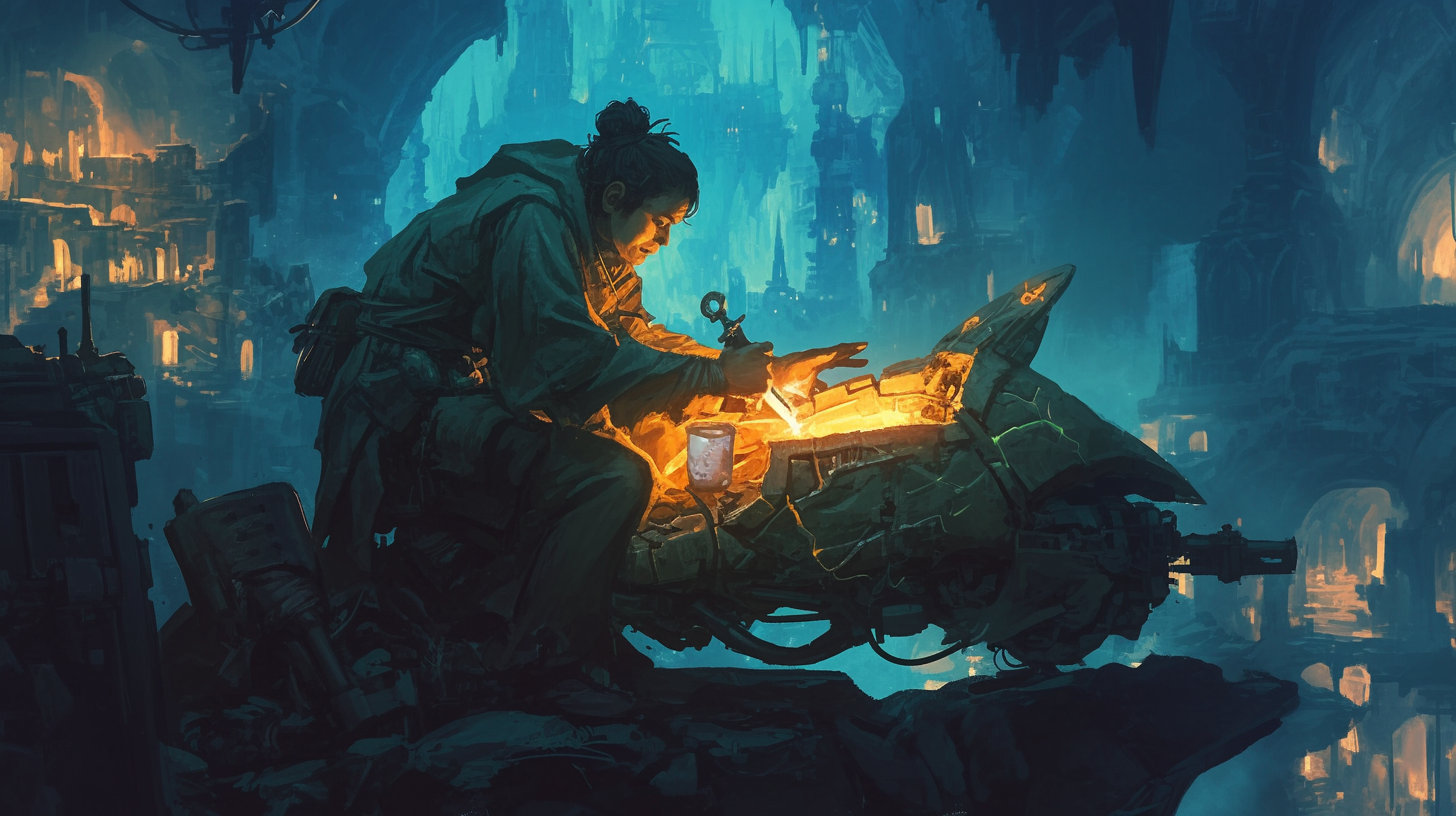
Constructing a runecycle out of nisekite was a far less precarious and meticulous process compared to creating an Augmented. However, the expert skillset of a stonemodder were still of the utmost importance when it came to building a runecycle because majority of the components involved were still Nisekite.
Suggested reading: Runecycles
Stonemodder Prevalence
With the demands of the Bornu always increasing, Nekrosakan miners were constantly on the lookout for ways to improve their chances of survival. In the deadly Niseki Caverns and Deepstar Mines, lithonatomical Augmentation was more than welcomed. In fact, Nekrosaka’s mining society would soon find itself in a culture where non-Augmented team members were shunned and turned away—leading to issues of new miners finding work.
Stonemodders were always busy, and constantly had customers both new and old in their workshops. Nisekite stone in lithonatomical components was always being ground down—augmented constantly had to return to stonemodders for repairs.
The Kenha had tight connections to the best stonemodders, always willing to pay fortunes to upgrade themselves or induct new members into their organization.