Varakira
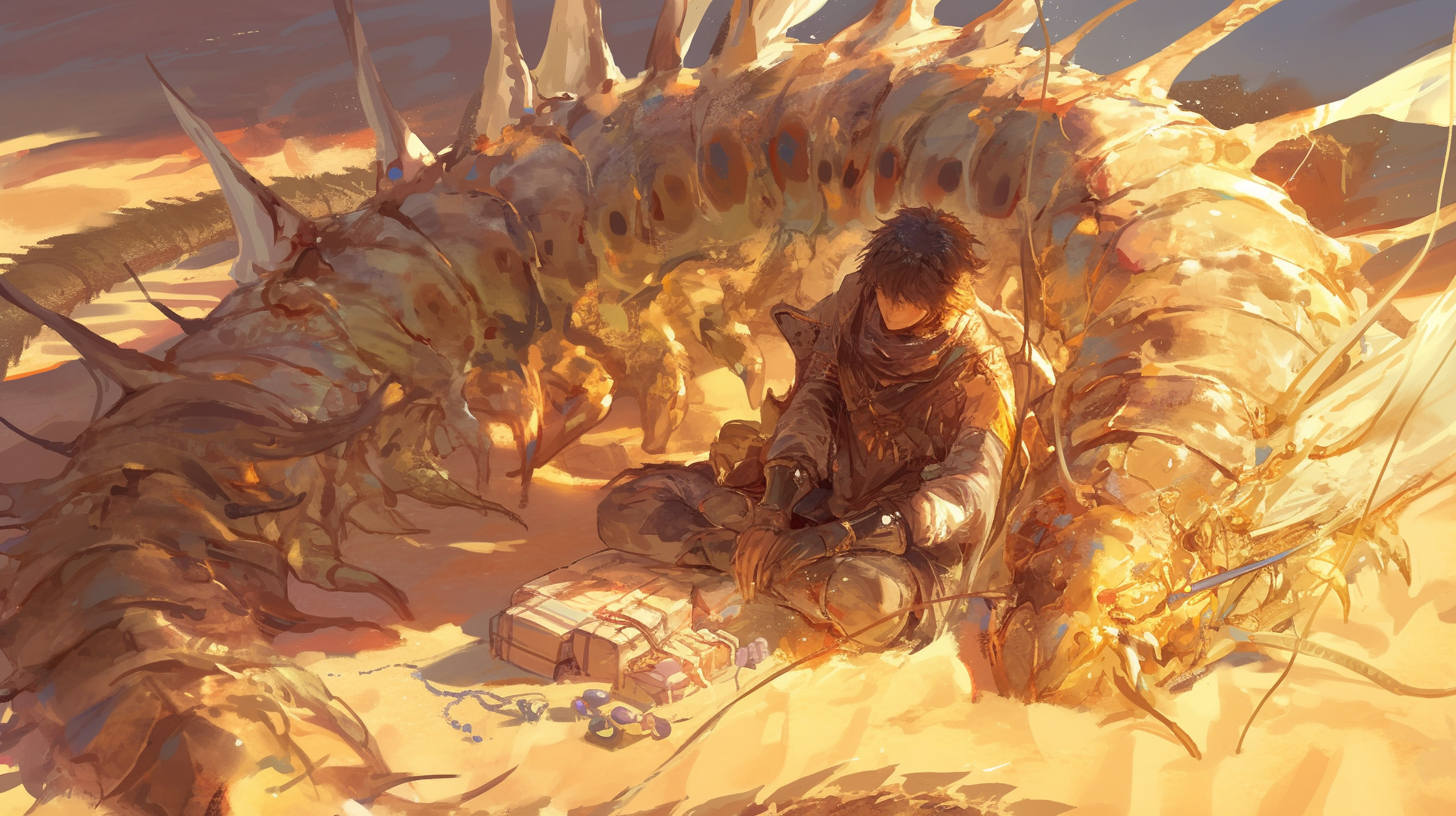
Varakira were giant millipede-like insects commonly used across Legere as beasts of burden and non-combative mounts.
Biology #
Defensive Mechanisms #
Varakira were giant millipedes with big horns on their tails. They could swing their bodies around with adept accuracy to slice at predators as a defense mechanism as they ran. If they were grappled by predators, they could swing their body around to stab them.
As a defense mechanism if a varakira couldn't flee, it would curl up to protect their soft body and excrete toxic acids that could corrode the flesh of attackers. While this was an excellent method of protection for wild varakira, the instinctive usage of such mechanisms was precisely what kept varakira from becoming a battlefield mount.
If it had enough time, varakira could attempt to burrow into the ground to hide themselves until danger had passed.
Communicative Membrane #
Varakira possessed a membrane that when expanded and contracted, produced a high-pitched vibration it used for rudimentary communication, especially in times of aggression or mating seasons.
Perception and Sensory Capabilities #
Varakira had poor eyesight, opting to sense their way around by using their antennae to tap the ground as it moved along. Their antennae were so well-tuned that the varakira could place them on the ground for an extended period of time to feel the small vibrations of things moving within a 30 meter radius. They had a pair of oval-shaped sensory organs below their antennae which were used to measure humidity in the surrounding areas.
Dietary Needs and Habits #
Varakira were detritivores, which made them rather easy to feed. Isutan varakira breeders could hand them scraps of plant matter left over from rice harvests that would be sufficient.
Ecology and Habitats #
Varakira thrived in well-watered areas of rich substrate. They were most commonly found in the Sangmyung Valley or Tuku Jungle with forests that received many torrential monsoons.
A hardier species of varakira was also found throughout the underground, used by Naga as both cavalry and beasts of burden.
Domestication #
Varakira had been domesticated on Legere for centuries. Their easy diet, even temperance, and large carrying capacity made them incredibly popular mounts across the land. Though they took up more space than a horse in a stable, if someone was looking to transport a large amount of goods or people somewhere, using a varakira was the best option.
Varakira could either be hitched to a high-riding wagon where its body was spread out beneath it, or it could be saddled up. Varakira saddles offered support for both thighs so riders' feet didn't drag along the ground as the arthropod traveled.
Varakira could be affectionate creatures when domesticated, often enjoying being stroked near the head or sleeping near their owners. A varakira's intelligence was on par with that of a dog or Silashophant.