Pisaka
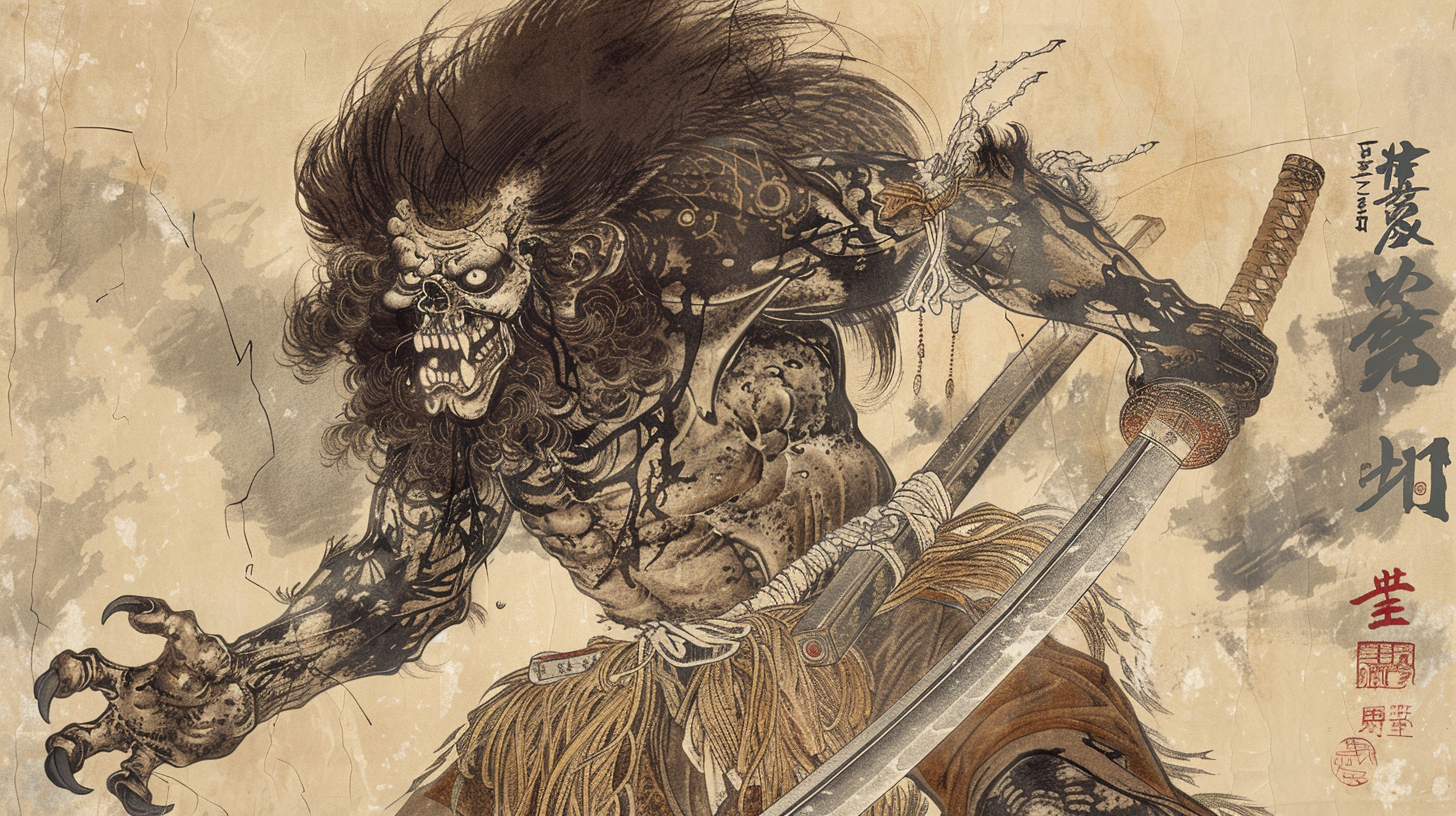
A legend as old as the Sangmyung Valley, the pisaka was a mythical creature that was depicted in varying Isutan artwork. The pisaka was a wild beast that wielded an unnaturally large massive sword, and was associated with wildfires.
The pisaka's name translates to "sword-beast", emphasizing its use of massive a massive Isutan sword. It was revered in Isutan culture as a force of nature, but also occasionally as a spirit of war.
Summary #
The pisaka was described as an 8-foot tall humanoid with a hairy body and clawed hands. Its face resembled a skeleton's: bald and stretched tightly over its bones, with pale grey skin--at least, when it is angry. It is said that when a pisaka bathes in enough blood to satiate its ferocity, its face is reddened by the splatter of blood and it becomes calm. The pisaka usually sported a maw filled with human-like, flattened teeth accompanied by big fangs.
Pisaka spent most of their time sitting in caves or on remote mountaintops, sharpening their huge swords for their next inevitable rampage. It was also said that pisaka could be seen migrating across the basin in a peaceful manner, or at least they would remain peaceful until an obstacle (living or not) appeared in its path. If something blocked them from moving forward, they would whip themselves into a terrible frenzy, lashing out with their swords and cleaving tree and rock in twain.
If two pisaka came across each other, they would bow before drawing their weapons and beginning a duel that was so fierce that the sparks flying off of their meeting steel would ignite forest fires.
Historical Basis #
Wildfires were an uncommon occurrence in the Sangmyung Valley, but when they did occur, they could be extremely devastating because of the dense vegetation. Thus it was rationalized that only something truly terrible could be attributed to their cause.
The actual appearance and nature of the pisaka may have been an exaggerated account of extinct giant primates that once lived in the valley. Large skeletons of ape-like creatures were often found in the few marshy swamplands throughout the center of the basin, which locals have claimed to be the remains of long-passed pisaka. To exacerbate the existence of pisaka, bandits have been known to dress up in stilts with large furry costumes in order to imitate the mythical creature at nighttime.
Spread #
The pisaka was a very well-known cryptid in the Sangmyung Valley, as statues and artwork of pisaka are found across the Eastern Provinces. The spread of alleged pisaka sightings greatly decreased after the Demon Wars, as the pisaka's physique and appearance of some nephilim constructs were fused together in tales. Thus, the vanquishing of demonic forces was equated with the extinction of pisaka.
Cultural Reception #
Isutan Warrior Culture #
Pisaka were commonly depicted in the facemasks of Nakai and Kwailok, warriors of the Eastern Provinces. It was believed that by bearing the fearsome visage of the sword-beast, the warriors will gain the power and ferocity of these wildfire-sparking monsters. ^mask
Notably, soldiers who were not nakai--like conscripted footmen--were forbidden from bearing the visage of a pisaka. Some Mabosa were known to wear pisaka masks, although it was often considered to be in poor taste.
Rarer were Pisaka prayer tattoos. It was thought that by covering oneself in script that called forth the spirits of Pisaka, the very essence of the sword-beasts would indwell whatever weapon the individual wielded. This was mainly practiced by an obscure group of warrior monks from before the Ganpoumi Fi's unification of the Eastern Kingdoms. This practice would become incredibly rare going forward, especially because the tradition was stigmatized as something that only desperate villains did in Isutan folktales. More than once however, particularly superstitious Nakai serving the Ganpoumi Fi or Songkram Empire would undergo this extensive tattooing process just to try and get the edge the believed they needed. ^603e52
In Literature #
There is a tale spread during the Ganpoumi Fi's reign about Shi Toyum, a poor man who wished to sell all of his belongings in order to finally have enough money to travel north and find his rich brother, who he hoped would take him in.
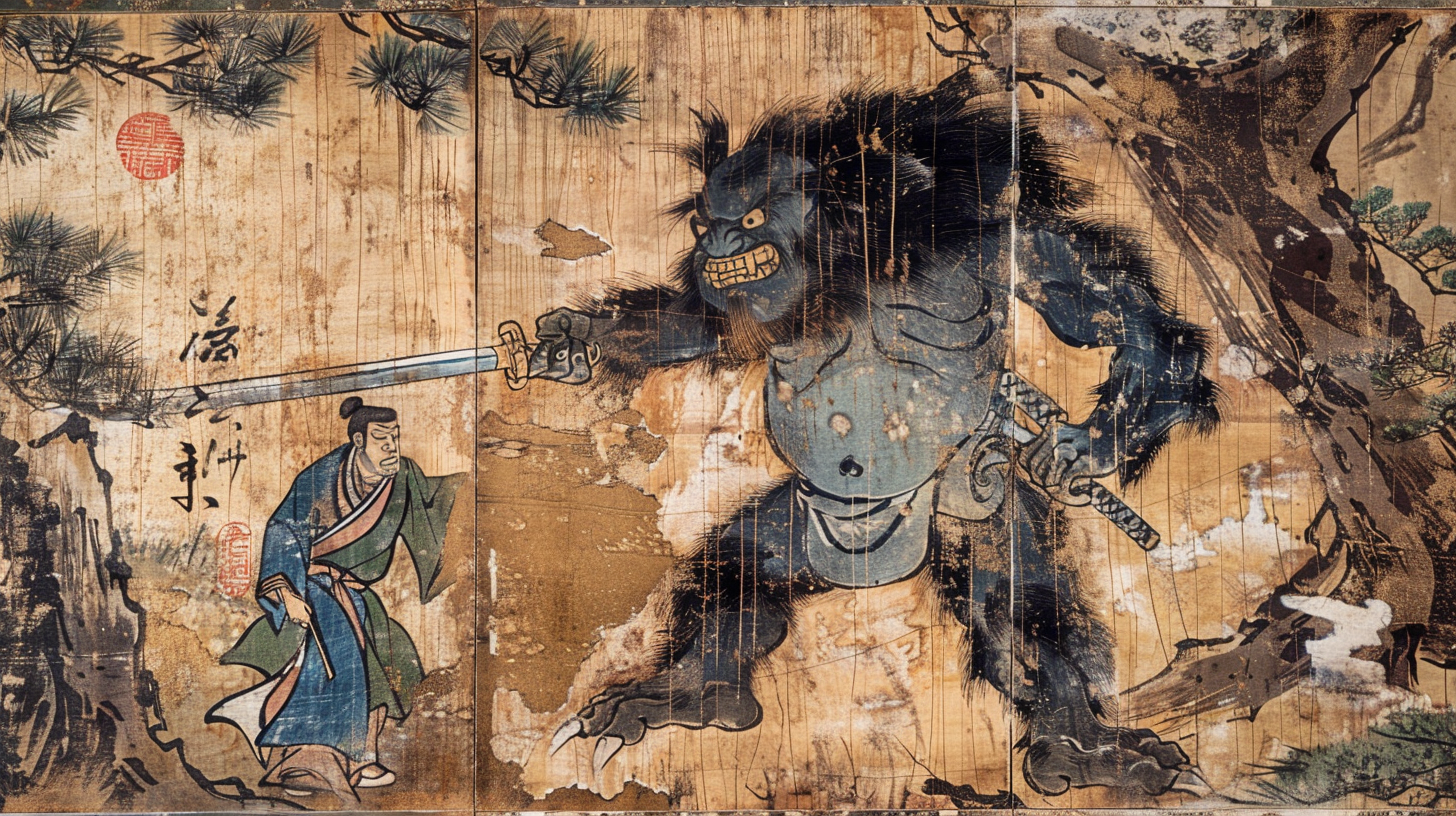
The pisaka Won presents the blade of his rival, Gando, to Shi Toyum.
In the third chapter of the tale, it goes that Toyum found a buyer in everyone for everything he had, except one item--a large nail that he had found at the bottom of a river. This nail wasn't wanted by anyone, as they claimed it was too large for anyone to use. This truly massive spike (described to be as long as his forearm) was the last thing he needed to sell in order to buy food for his journey, and he became downcast as none offered to purchase it. Eventually, Toyum stumbled across Won, a vengeful pisaka who had his arm cut off by an opponent of his own kind. Won wished to fight his foe once again, but he couldn't as his sword-arm was the one cut off! Won had been wandering the land with his sword-arm in his other hand, and his sword-arm still clutching his giant weapon. Won, still angry at his defeat, prepared to crush the tiny Toyum unless he had something that he could offer him. In desperation, Toyum presented his big nail to the pisaka, who took it and used it to pin his sword-arm back onto himself. Won allowed the man to live, as he had given his lost arm new life and the ability to meet his foe in combat once again. Won bested his adversary in combat, and became grateful enough to give his fallen enemy's sword to Toyum as payment for his aid. Toyum would go on to sell the sword in the 4th chapter of the story.
In Art #
Statues of pisaka can be found across the Sangmyung Valley. It was believed that if made well enough, these statues would resemble more powerful pisaka and scare others away from what they guarded. Pisaka statues were often placed around temples, by roadsides, or at city gates. Paintings of pisaka fighting warriors or Klo Ming were also found often in the Eastern Provinces.
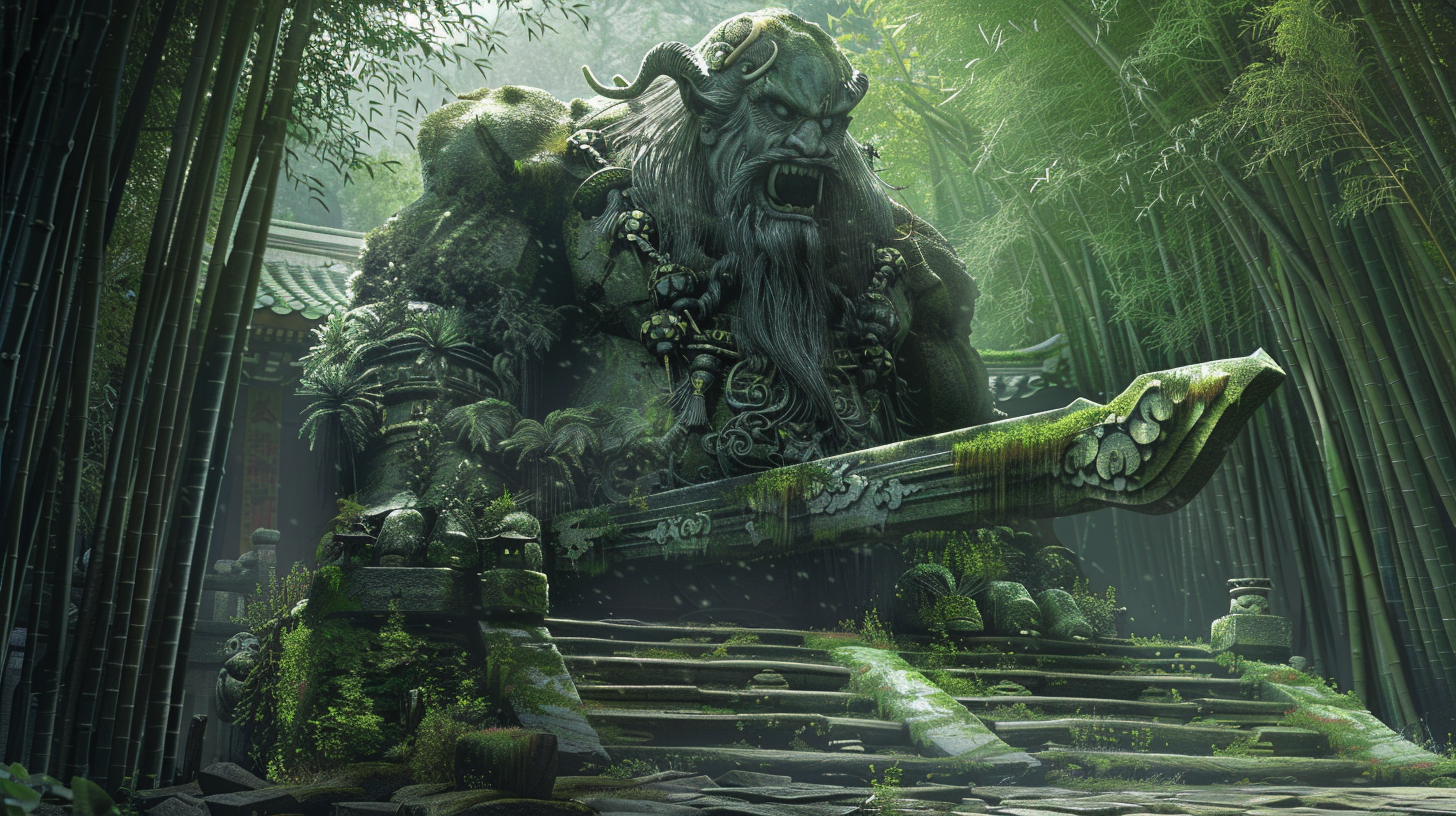
A pisaka statue situated on the back entryway of a Ganpoumi Fi sword school. The location of the statue is indicative of the idea that none shall catch the school offguard.